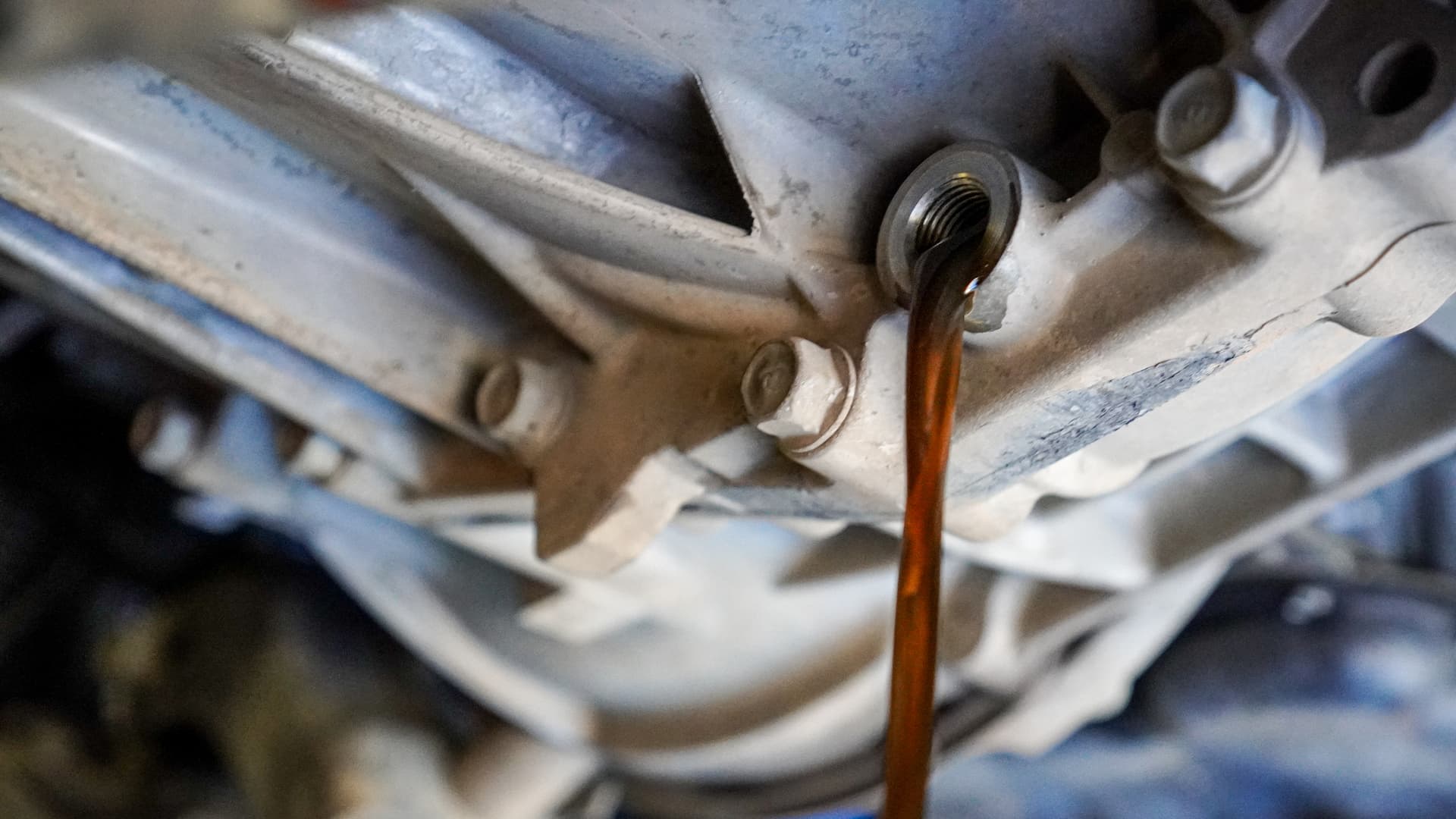
You already know transmission fluid is critical for keeping parts lubricated, preventing overheating, and making gear shifts feel smooth. So when it’s time to check the fluid level, you might reach out for a dipstick, only to realize there isn’t one.
You’re not alone. Many newer vehicles are built without a traditional dipstick, which can make checking the fluid levels seem confusing.
The good news? You can still do it, just with a different approach.
In this guide, we’ll cover the safe and reliable methods for checking the transmission fluid without a dipstick.
This Article Contains:
- How to Check If Your Car Has a Transmission Dipstick
- 3 Methods to Check Transmission Fluid Without a Dipstick
How to Check If Your Car Has a Transmission Dipstick
Older cars usually come with a dipstick, while many newer models have sealed transmissions that don’t include this part.
To see if you have a dipstick, look on the left side of your engine for a T-shaped stick with a yellow or orange handle. Don’t confuse it with the engine oil dipstick. You could also check your owner’s manual to help locate it.
Still can’t spot the dipstick?
Then follow these next steps.
3 Methods to Check Transmission Fluid Without a Dipstick
Here are three ways to check the fluid level without using a dipstick:
Method 1: Check Through the Fill Plug
The fill plug is where you add transmission fluid. Here’s how a mechanic checks the fluid level using this part:
- Park and idle: Park on a level surface, shift to park, and let the engine idle. Warm it up to normal operating temperature (as per the owner’s manual).
- Locate the fill plug: Find the plug on the top or side of the transmission.
- Open the plug: Use the correct wrench or socket to loosen and remove it carefully.
- Add fluid: Slowly pour transmission fluid into the fill plug with a funnel or hose.
- Check the fill plug: Keep adding until fluid drips out of the plug. If there’s a steady trickle, this means it’s full.
- Close the plug: Once the fluid level is correct, reinstall it and tighten it to the torque spec listed by the manufacturer.
Besides using the fill plug, there’s another method to check the level.
Method 2: Use an OBD Scanner
A mechanic can electronically check your transmission fluid’s health and level by following these steps:
- Connect the scanner: Plug a compatible OBD2 scanner into the port, usually found under the dashboard on the driver’s side. Use a manual to help locate it.
- Turn on the ignition: With the scanner connected, switch the ignition to the “ON” position.
- Check live data: Most modern scanners have a Live Data mode that shows real-time sensor information. While it can’t physically measure fluid level, it can reveal important clues:
- Fluid temperature: Readings above 200°F may point to low or degraded fluid.
- Gear shift data: Sluggish or delayed shifts can suggest fluid issues.
- Hydraulic pressure: Low or inconsistent readings may signal a problem with the fluid.
- Add fluid if required: If the data signals a low fluid level, add the transmission fluid until it’s within the recommended range.
If there’s no scanner available, the mechanic can use a flexible dipstick for sealed transmissions.
Method 3: Use a Special Dipstick
Here’s how a mechanic uses the dipstick tool:
TIP: Flexible transmission dipsticks can be purchased. Make sure it’s for your vehicle’s make and model.
- Warm up the car: Park on a level surface and run the engine so it reaches operating temperature.
- Insert the dipstick: Remove the fill plug and slide the dipstick in until it reaches the bottom of the transmission pan.
- Clean the dipstick: Remove the dipstick and wipe off the excess fluid to prepare for an accurate reading.
- Check the level: Compare the reading to the indicator on the dipstick. Manufacturers often provide a chart to confirm the correct range.
- Adjust if needed: Add or remove fluid to match the recommended level.
Want to learn more?
Explore our detailed guides on checking and changing your transmission fluid.
Skip the Hassle — Let AutoNation Mobile Service Check Your Transmission
Checking transmission fluid without a dipstick can be inconvenient. Getting the level right takes precision. If it’s done incorrectly, your vehicle could be put at risk. That’s why it’s a job for a professional.
With AutoNation Mobile Service, you don’t have to visit the shop. Book an appointment and our expert mechanic will come straight to your driveway. You also get upfront pricing and a 12-month | 12,000-mile warranty on every repair.
Get in touch with us today.