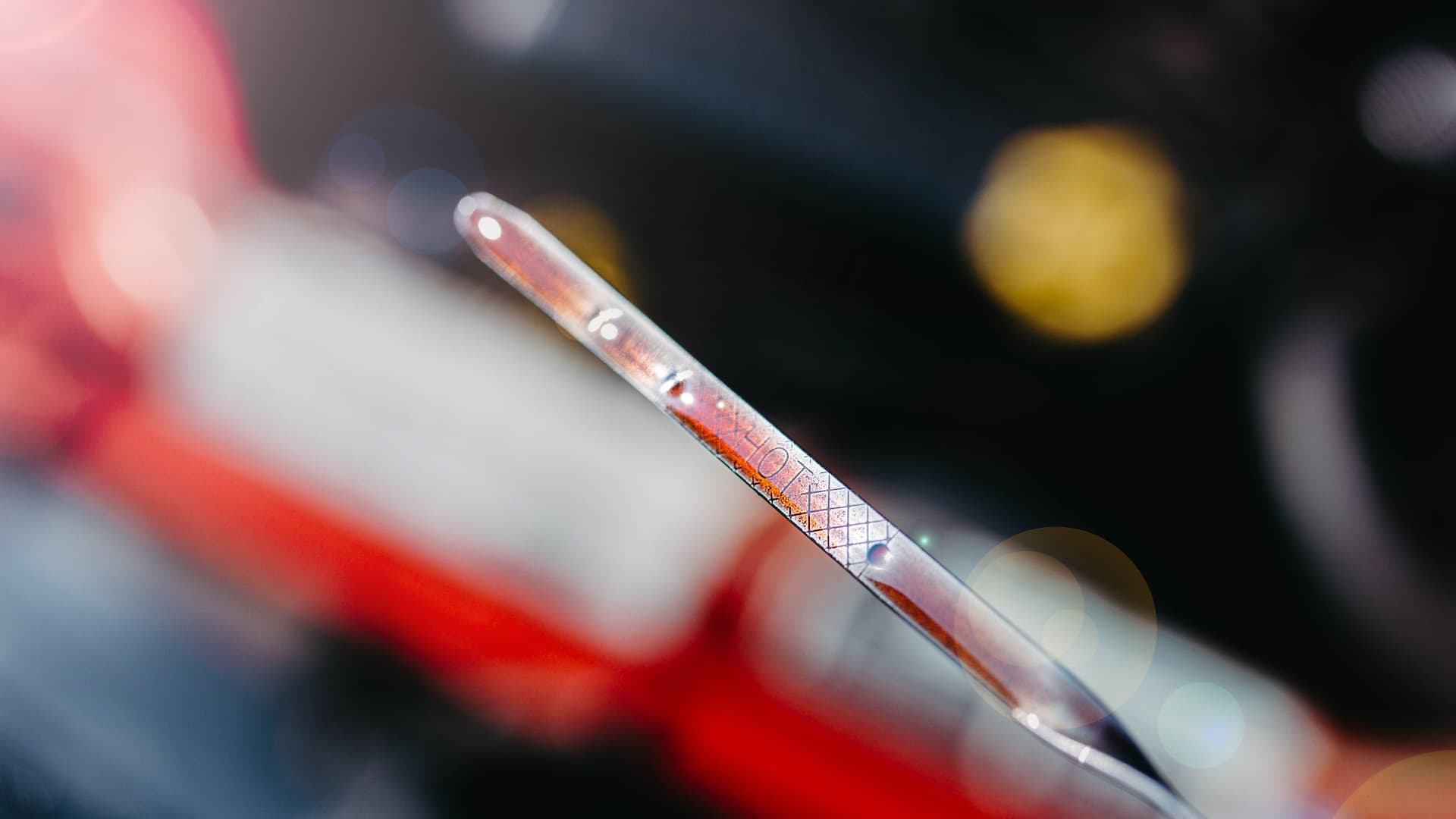
In most cars, you’ll want to check transmission fluid when the engine is hot, running, and the car is parked on level ground.
That said, not every vehicle follows the same rule.
Some cars require the check in Neutral, some with the engine off, and many modern models don’t even have a dipstick at all. Always confirm with your owner’s manual before you check.
Let’s explore this in detail.
This Article Contains:
- Why You Should Check Transmission Fluid When Hot (vs. Cold)
- Why Does Transmission Fluid Show Different Levels Hot vs. Cold?
- How to Check Transmission Fluid the Right Way
- Do All Cars Use the Same Temperature Range for Fluid Checks?
- What if My Car Doesn’t Follow the Standard Method?
- How Wrong Fluid Levels Can Damage Your Car
Why You Should Check Transmission Fluid When Hot (vs. Cold)
Fluid expands as it heats up and circulates through the transmission, giving you the most accurate reading as it reflects working conditions.
Cold readings can work as a rough estimate, but they’re not reliable.
You’ll notice that the dipstick shows both hot and cold ranges, and they’re for a reason:
- The hot mark reflects how your transmission actually operates on the road. Once the fluid has expanded and is flowing through the system, that’s when you can measure the real working level.
- The cold mark is mainly for factory fill or quick checks when the car hasn’t been driven. It only confirms there’s enough fluid in the pan to start the vehicle safely.
Relying on a cold check can mislead you — outside temperature, how long the car sat, or fluid draining into the pan all throw it off. A hot check avoids those variables, so you know the reading is right.
Why Does Transmission Fluid Show Different Levels Hot vs. Cold?
When your car is off and the transmission is cold, most of the fluid drains back into the pan. That makes the level look higher on the dipstick.
Once the engine is running and the transmission warms up, the fluid expands and starts moving through the torque converter, valves, and passages. Since more fluid is circulating instead of resting in the pan, the dipstick shows a lower level than when it was cold, even though the fluid has expanded.
NOTE: We’re not talking about the dipstick markings here — we’re referring to the position of the fluid on the dipstick in different temperatures. On the stick, the “COLD” mark is always positioned lower than the “HOT” mark, and we’ve explained what they mean earlier.
How to Check Transmission Fluid the Right Way
Here’s the safe and accurate method most vehicles require:
- Drive for 10–20 minutes to bring the fluid up to operating temperature.
- Park on a level surface and keep the engine running.
- Shift slowly through all the gears, then leave it in Park (or Neutral if your manual says so).
- Pull the dipstick, wipe it clean, reinsert it fully, and check the HOT range.
Want a deep dive into the process? Read our detailed guides on:
Do All Cars Use the Same Temperature Range for Fluid Checks?
Not exactly. Most vehicles are designed to be checked around 150–200°F, but some makes (like Honda or Toyota) may have slightly different requirements.
Always follow your owner’s manual for the exact specs.
What if My Car Doesn’t Follow the Standard Method?
A few vehicles still require the engine to be off during the check, and many modern models don’t even have a dipstick anymore.
In such cases, the fluid must be checked through a service port, typically at a dealer or by a professional technician.
How Wrong Fluid Levels Can Damage Your Car
Too much or too little fluid can both cause problems.
- Overfilling creates foam, which leads to erratic shifting and pressure issues.
- Low fluid means overheating, slipping, and long-term wear.
While you’re at it, take a second to check the color and smell. Fresh fluid should be bright red. Dark or burnt-smelling fluid is a red flag for service.
Trust AutoNation Mobile Service for Professional Transmission Care
At the end of the day, hot checks give you the most accurate reading of your transmission fluid. Cold marks are only a rough guide — the hot range is what really counts.
If you’d rather leave it to the pros, AutoNation Mobile Service makes it simple. Our expert mechanics come to you with easy online booking, upfront pricing, and a 12-month/12,000-mile warranty on all repairs.
Whether your car uses a dipstick or a sealed system, we’ll follow the exact procedure your vehicle needs and handle the fluid safely.
Get in touch with us today.