
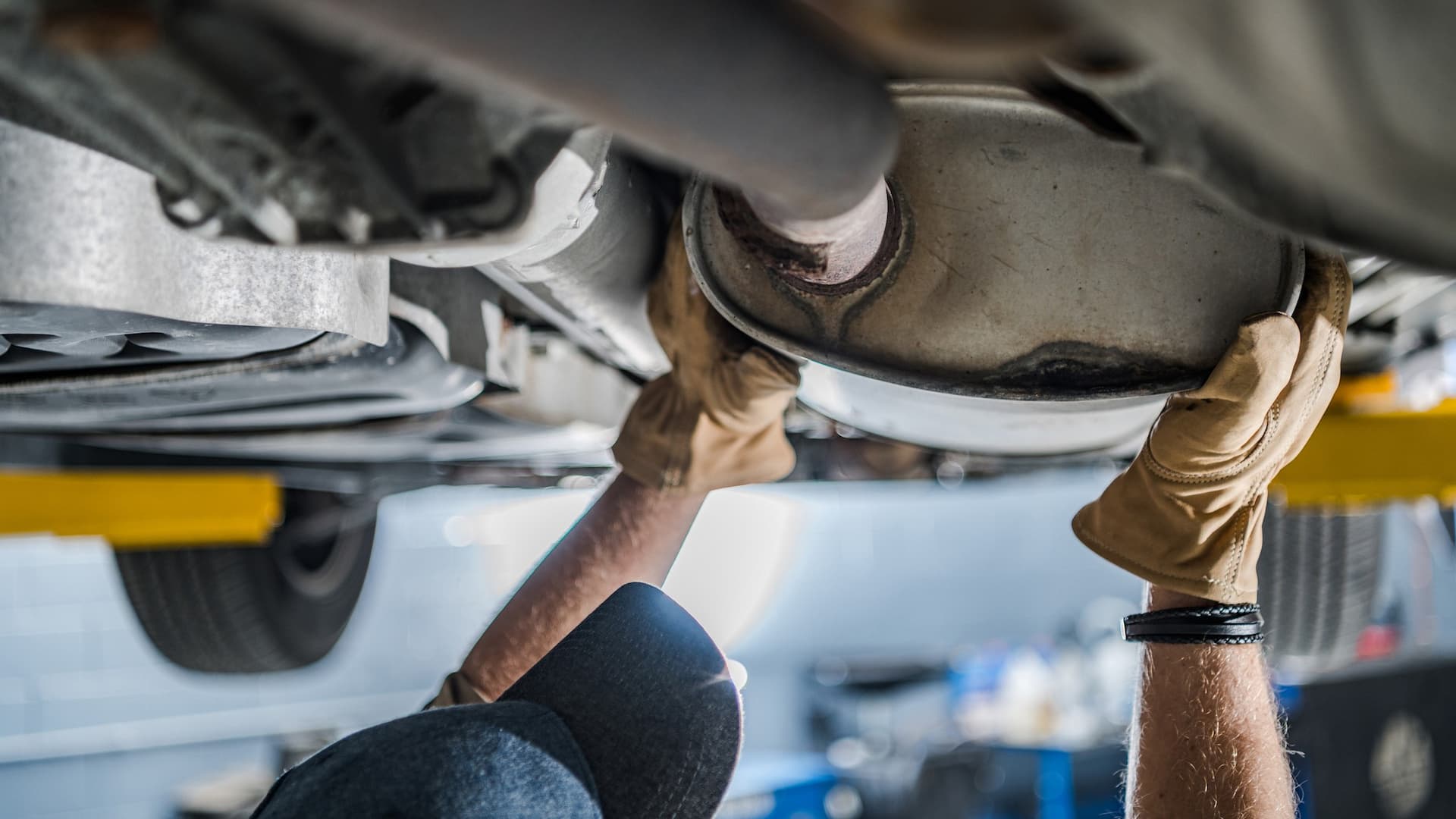
A catalytic converter check engine light usually means the vehicle’s computer detected a problem with the converter’s efficiency. This can trigger several diagnostic trouble codes, with P0420 and P0430 being the most common. However, the cause isn’t always faulty catalytic converters, and driving safety depends on what’s causing the warning.
- Age, heat, and physical damage
- Misfires and unburned fuel
- Faulty oxygen sensors
- Exhaust system leaks
- Oil burning or coolant contamination
- Rotten egg smell
- Sluggish acceleration or loss of power
- Poor fuel economy
- Rattling noise
Let’s break down what causes catalytic converters to fail, the warning signs, and the repair costs.
This Article Contains:
- What Does a Catalytic Converter Check Engine Light Mean?
- Can You Drive With a Catalytic Converter Warning Light On?
- How Can You Tell if Your Catalytic Converter Is Failing?
- What Causes a Catalytic Converter to Trigger the Check Engine Light?
- How Do Mechanics Diagnose the Cause of a Catalytic Converter Problem?
- Can You Fix a Catalytic Converter Without Replacing It?
- How Much Does It Cost to Fix a Catalytic Converter, P0420, or P0430 Code?
- How to Prevent Catalytic Converter Failure
What Does a Catalytic Converter Check Engine Light Mean?
The warning light usually indicates a problem with the catalytic converter or its monitoring systems.
In most modern vehicles, a catalytic converter problem will trigger the check engine light (CEL), which is usually amber. The light may also flash if the vehicle detects a more serious issue, such as a misfire that could damage the catalytic converter.
Some vehicles may also have a dedicated catalytic converter warning light. Depending on the model, it may appear as a catalytic converter or honeycomb-shaped symbol, sometimes with heat-wave lines or the letters “CAT.” The exact symbol, color, and warning behavior can vary by vehicle, so check your owner’s manual if you’re unsure what the light means.
If the warning light comes on, a diagnostic scan of the vehicle’s computer can help identify the problem. In most cases, the scan will return a P0420 or P0430 trouble code.
P0420 Code Vs. P0430 Code: What’s the Difference?
The main difference is which engine bank has low catalytic converter efficiency.
| Code | Meaning | What it tells you |
| P0420 Code | Catalyst System Efficiency Below Threshold, Bank 1 | The system detected low catalyst efficiency on Bank 1 (the side with cylinder #1). |
| P0430 Code | Catalyst System Efficiency Below Threshold, Bank 2 | The system detected low catalyst efficiency on Bank 2 (the side opposite cylinder #1). |
Now that you know what the warning light and codes mean, let’s look at how urgently you should address the issue.
Can You Drive With a Catalytic Converter Warning Light On?
You can drive with the warning light on, depending on whether it’s steady or flashing and how the vehicle runs. Here’s a quick look at what each type of warning light means:
1. Steady Warning Light
If the vehicle runs normally, you can drive for a short time, but have the underlying issue checked promptly to prevent further damage.
2. Flashing Warning Light
This requires immediate attention, particularly if the engine is running rough or losing power. An active misfire can send unburned fuel into the exhaust, causing serious damage to the catalytic converter.
A steady or flashing warning light means the vehicle has detected a problem. However, your vehicle may give you several clues before the warning light appears.
How Can You Tell if Your Catalytic Converter Is Failing?
Several symptoms can point to a failing catalytic converter, but other engine or exhaust issues can cause them too. The following signs don’t confirm failure, so proper diagnosis is important:
- Check engine light: A CEL with a P0420 or P0430 code, or a catalytic converter warning light, can indicate a problem with converter efficiency.
- Sluggish acceleration: The vehicle feels slow to respond, especially from a stop.
- Reduced engine power: A severely restricted converter can limit exhaust flow, making it harder for the engine to produce normal power.
- Rotten-egg smell: A strong sulfur-like exhaust odor indicates the converter isn’t processing exhaust gases properly.
- Metallic rattling: Loose or broken converter components can rattle, often on startup or acceleration.
- Poor fuel economy: An inefficient or restricted exhaust system can make the engine work harder and use more fuel.
- Excessive heat: A catalytic converter can become extremely hot when unburned fuel enters the exhaust and burns. This can damage the converter over time.
Next, let’s look at some common causes of a failing catalytic converter.
What Causes a Catalytic Converter to Trigger the Check Engine Light?
Your vehicle’s computer uses oxygen sensor readings to monitor converter performance. If those readings show lower-than-expected efficiency, it triggers the CEL. Common causes include:
1. Age, Heat, and Physical Damage
Excessive heat, physical impact, or normal wear can damage the catalyst or degrade its honeycomb structure.
2. Engine Misfire and Unburnt Fuel
An unresolved misfire can cause black smoke and send unburnt fuel into the exhaust, potentially damaging the converter.
3. Faulty Oxygen Sensors or Exhaust System Leaks
A faulty sensor or exhaust leak can cause inaccurate readings, triggering a converter-efficiency code even when the converter is fine.
4. Oil Burning or Coolant Contamination
Engine and exhaust problems can lead to engine oil burning or coolant contamination, which may, over time, reduce the catalyst’s ability to process exhaust gases.
Because several problems can affect converter performance, finding the root cause requires careful examination and testing.
How Do Mechanics Diagnose the Cause of a Catalytic Converter Problem?
A mechanic uses several checks to identify the cause. Here’s a quick overview:
Step 1: Read the Diagnostic Trouble Codes
The mechanic uses a scanner to retrieve stored or pending trouble codes and check fuel trim to guide further testing.
Step 2: Check for Related Codes
Next, the mechanic looks for codes that could point to other issues. These codes include:
- Misfire codes
- Fuel trim or fuel system codes
- O2 sensor codes
- Other emissions faults
Step 3: Inspect for Exhaust Leaks or Physical Damage
If there aren’t any codes related to other issues, the mechanic will conduct a visual inspection. They’ll check for exhaust leaks, loose connections, dents, rust, or other physical damage that may affect converter performance or sensor readings.
Step 4: Compare O2 Sensor Readings
With the engine warmed up, the mechanic compares oxygen levels in the exhaust stream using the upstream and downstream O2 sensors. If the downstream sensor closely mirrors the upstream sensor’s pattern, the converter likely isn’t storing oxygen and reducing harmful emissions as expected.
Step 5: Test for Exhaust Restriction When Symptoms Point to a Clog
When performance issues suggest restricted exhaust flow, the technician checks the exhaust stream for signs of a blockage.
If tests show the catalytic converter is damaged, clogged, or no longer reducing emissions effectively, it may need to be replaced. If they point to another issue, such as a misfire or O2 sensor fault, that problem should be repaired instead.
Once the exact cause is identified, the next step is determining whether the catalytic converter can be repaired or needs to be replaced.
Can You Fix a Catalytic Converter Without Replacing It?
Cleaning can restore a converter’s efficiency depending on the cause. Let’s look at when it can help and when it won’t:
1. When Cleaning Might Help
Cleaning may help when deposits or contamination occur while the catalyst remains intact. However, it’s important to identify the cause first rather than using cleaning as the first response.
2. When Cleaning Won’t Work
Cleaning cannot repair a melted substrate, broken honeycomb, severe deterioration, or major physical damage. In these cases, a new catalytic converter may be necessary.
Whether cleaning can help or the converter needs to be replaced depends on the converter’s condition. The type of repair needed will ultimately determine the cost.
How Much Does It Cost to Fix a Catalytic Converter, P0420, or P0430 Code?
Repair costs for a faulty catalytic converter or a P0420 / P0430 code vary by location, vehicle make and model, labor rates, and parts used. Replacing a converter can be costly because it contains precious metals such as platinum.
Here are some estimates, including labor:
- Diagnostic testing: $50 to $200
- Catalytic converter cleaning: $50 to $300
- Oxygen sensor repair or replacement: $120 to $900
- Exhaust leak repair: $200 to $350
- New converter: $450 to $4200
Many catalytic converter problems can be avoided by addressing the conditions that cause damage in the first place.
How to Prevent Catalytic Converter Failure
Here are a few ways to help protect your catalytic converter:
- Fix engine misfires promptly, as unburned fuel can overheat and damage the catalytic converter.
- Don’t ignore a recurring CEL, even if the vehicle seems to run normally.
- Address excessive oil or coolant consumption, which can damage or contaminate the catalytic converter.
- Maintain ignition components, such as spark plugs and ignition coils, to help prevent misfires.
- Repair exhaust leaks to prevent harmful gases like carbon monoxide from escaping and affecting catalytic converter performance.
- Don’t remove or modify the vehicle’s emissions system. Let professional technicians handle it, as improper modifications can increase harmful emissions and interfere with diagnostics.
- Keep up with regular maintenance and routine inspections according to the manufacturer’s recommendations.
Get Your Catalytic Converter Problem Diagnosed & Fixed by AutoNation Mobile Service
A P0420 or P0430 code can indicate several problems, so cleaning or replacing the catalytic converter isn’t always the solution. Proper testing can help identify the cause and help prevent unnecessary repairs.
Got a catalytic converter warning light?
AutoNation Mobile Service can bring the repair to you.
Our mobile mechanics offer seven-day service, upfront pricing, and convenient online scheduling. Plus, every repair is backed by a 12-month/12,000-mile warranty.
Schedule your service and get hassle-free car repairs right in your driveway.