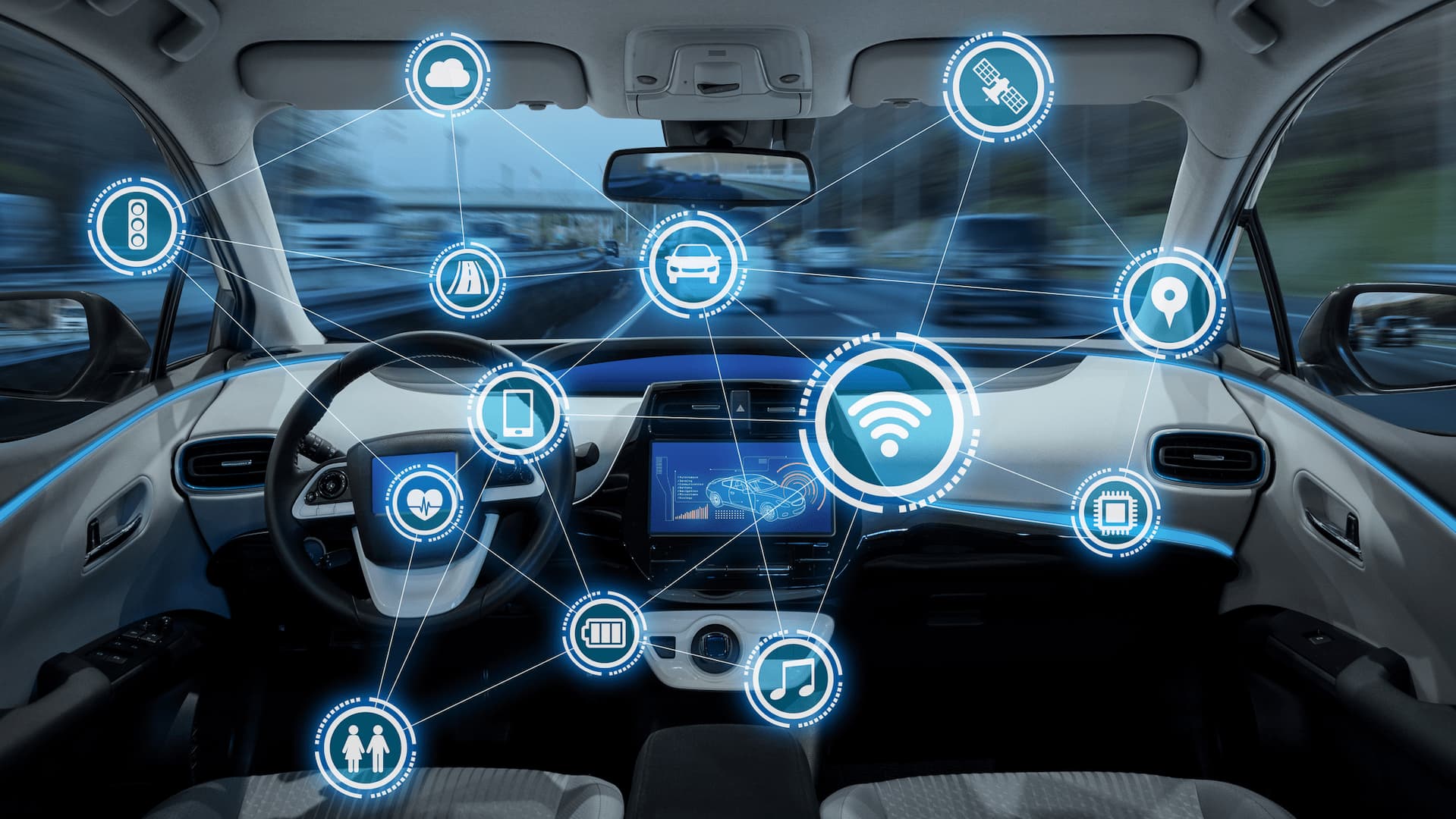
Cars today are no longer just about horsepower and handling. They’re turning into smart, connected systems on wheels that can do everything from sending maintenance alerts to rerouting you around traffic in real time.
You can start your car from your phone, update its software while parked, or unlock new features with a tap.
Here are the seven top connected car features shaping the way Americans drive and what they mean for the future of mobility.
1. Remote Access and Telematics
Remote access is one of the most widely used connected features in today’s vehicles — and for a good reason. It lets you start or stop your car, lock or unlock it, check its location, and even monitor fuel or battery levels — all through an app.
According to the US Department of Transportation, by 2026, nearly 90% of new cars sold in the U.S. will have some level of built-in telematics functionality. What was once considered a luxury is now becoming a must-have.
Automakers like GM, Ford, and Hyundai offer platforms like OnStar, FordPass, and Bluelink, respectively — many of which also include emergency assistance and vehicle health monitoring.
2. Infotainment and Personalization
In-car infotainment has moved far beyond basic radio and maps. Systems now act like digital hubs, letting drivers connect their smartphones for music, calls, navigation, and apps.
A 2025 study found that 67% of U.S. drivers would pay extra for more advanced infotainment. That’s why Apple CarPlay and Android Auto are available in most new U.S. vehicles, and support voice assistants, custom driver profiles, and cloud syncing.
Other features such as media recommendations, remembered seat positions, and voice-activated controls also make the driving experience feel more tailored to each driver.
3. V2X Communication
Did you know?
Cities like Ann Arbor, Michigan, are already testing V2X technology with connected intersections and smart traffic signals.
So, what is it?
Vehicle-to-Everything (V2X) technology allows cars to “talk” to their surroundings — other vehicles, traffic lights, even pedestrians. This real-time communication helps improve safety by warning drivers about potential hazards before they come into view.
The U.S. Department of Transportation estimates that wide-scale V2X adoption could prevent over 615,000 crashes yearly. To support this, the Federal Communications Commission (FCC) has dedicated 30 megahertz (MHz) of radio spectrum to V2X communication.
4. Advanced Driver Assistance Systems (ADAS)
ADAS features help make driving safer and less stressful. These systems can control both steering and speed while requiring driver supervision.
Some popular features include:
- Adaptive cruise control
- Lane-keeping assistance
- Blind spot monitoring
- Hands-free highway driving
Platforms like GM’s Super Cruise and Ford’s BlueCruise are making these features more widely available.
5. Predictive Maintenance
Many connected cars can monitor their systems and tell you when something might go wrong. This includes tracking the health of your battery, brakes, tires, and engine components.
These alerts can help drivers avoid unexpected breakdowns and schedule repairs before a part fails. This is good for convenience and even better for long-term vehicle health.
6. Over-the-Air (OTA) Updates
Gone are the days when updating your car’s software meant a trip to the dealer. Now, automakers can send updates directly to your vehicle while it sits in your driveway.
These OTA updates can improve navigation, fix bugs, enhance safety features, or add new capabilities. In the coming years, most major automakers are expected to support full OTA functionality across infotainment, performance, and safety systems.
This supports the rise of software-defined vehicles (SDVs), a category projected to be worth between $400 and $600 billion globally by 2030.
7. Subscription-Based Features
Some automakers are now offering features on demand, allowing drivers to activate or deactivate certain functions with a monthly fee.
These include:
- Activating heated seats during colder months
- Upgrading to a more advanced navigation system for a road trip
- Enabling a performance mode for enhanced driving
The idea is to give drivers more flexibility and control over how they use and pay for features.
But with all this connectivity, it’s fair to ask…
What About Data Privacy?
Modern cars collect a lot of information, including location, driving habits, voice commands, and app usage. According to Capgemini, 75% of U.S. drivers are concerned about how this data is stored or shared.
While federal agencies like the FCC and the National Highway Traffic Safety Administration (NHTSA) are developing nationwide standards, much of the regulation still falls to individual states. For example, in 2024, California updated its rules requiring automakers to clearly explain what data they collect and how it’s used.
Bottom line: As technology continues to grow, so will the importance of transparency and control. Drivers want features that work for them, but also want to know their privacy is protected.