
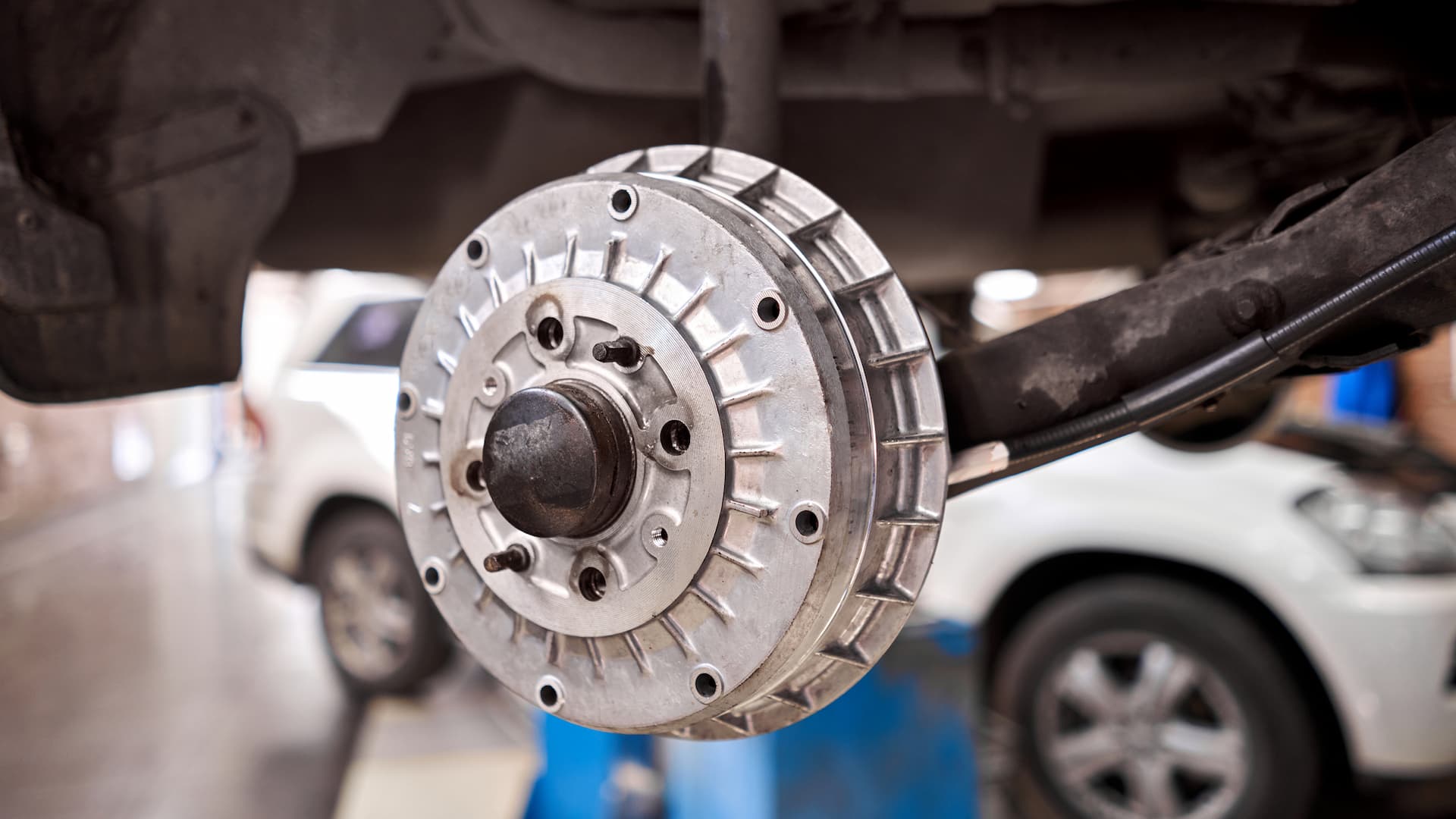
Drum brakes are an essential component of rear braking systems on many vehicles. Although they serve the same purpose as rear disc brakes, they operate using a different mechanism.
Some of the main parts of drum brakes include:
- Brake drum
- Brake shoe
- Backing plate
- Wheel cylinder
- Return or retracting spring
- Self-adjuster
In this guide, we’ll take a closer look at how drum brakes work, how much it costs to fix them, and why you should leave all your brake repairs to professionals.
This Article Contains:
- What Are Drum Brakes and How Do They Work?
- The 6 Main Components of Drum Brakes Explained
- The 3 Different Types of Drum Brakes
- How Much Does a Drum Brake Replacement Cost?
- Should You Fix Faulty Drum Brakes Yourself?
- What Do Mechanics Check to Ensure Your Drum Brakes Are in Good Condition?
Let’s get started!
What Are Drum Brakes and How Do They Work?
A drum brake is a type of braking system most commonly used on rear wheels, where it often doubles as the parking brake.
It uses the friction generated by the brake shoes when they rub against a rotating cylinder-shaped brake drum. This braking force or friction converts kinetic energy into thermal energy and decelerates the vehicle.
Here’s a detailed breakdown of how everything works:
When you step on the brake pedal, the master cylinder compresses the brake fluid, and the wheel cylinder piston expands outward. The outward motion of the piston forces the brake shoe to press against the brake drum.
Just as the brake shoe lining touches the drum’s inner surface, the wheel’s motion reduces, and the vehicle stops. When you release the brake pedal, the retracting springs draw the brake shoe inward — removing the contact between the drum brake lining and the shoe.
When you engage the parking brake (e-brake) on a car with drum brakes, the cables force the brake shoes against the drum, preventing the vehicle from moving.
Next, let’s explore each of the brake parts we’ve covered.
The 6 Main Components of Drum Brakes Explained
Here’s how the different drum brake components function:
- Brake drum: These are large metal discs made from cast iron or aluminum bolted to the wheel’s hub. Brake drums rotate with the hub and form a frictional pair with brake shoes to slow your car down.
- Brake shoe: The brake shoe is a curved piece of metal fitted on the rear wheel. It contains friction material inside the brake lining that pushes against the brake drum to stop the vehicle. In disc brakes, braking is handled by a brake pad pressing against the brake rotor, rather than a brake shoe pressing against a drum.
- Backing plate: This is a rigid metal plate that mounts and supports the brake shoes, wheel cylinder, and other parts. It also shields the rear brakes from dirt and debris.
- Wheel cylinder: The wheel cylinder contains a piston that moves outwards when the brakes are applied. The force of the piston pushes the brake shoe outwards and decelerates your vehicle.
- Return or retracting spring: A return or retracting spring pulls the brake shoes away from the drum’s friction surface when you let go of the brake pedal.
- Self-adjuster: The self-adjuster maintains the minimum gap between the brake shoe and drum to avoid contact with each other.
Now, are all drum brakes the same?
Not exactly.
The 3 Different Types of Drum Brakes
Here are the three main types of drum braking systems used today:
1. Mechanical Drum Brakes
This brake system is primarily used in two-wheelers.
In mechanical brakes, when you press the brake pedal, the brake camshaft turns, pushing the brake shoe outwards and rubbing it against the drum. The friction between the brake linings and the drum slows down the rotation of the wheel, stopping the vehicle.
When you release the brake pedal, the brake spring retracts, bringing the brake shoe back to its original position.
2. Hydraulic Drum Brakes
These drum brakes operate using hydraulic pressure.
In a hydraulic system, when you press down on your vehicle’s brake pedal, the fluid in the master cylinder increases the hydraulic force sent to the wheel cylinder. The wheel cylinder piston (instead of a cam) then pushes the brake shoes outward, and the friction between the shoes and the drum slows the wheel.
The hydraulic disc brake relies on a similar principle, but the disc brake design offers better performance than drum brakes. The rear disc brake system uses a slim rotor and caliper to stop your vehicle, rather than housing the key components within a metal drum.
3. Pneumatic-Assisted Drum Brakes
Pneumatic-assisted drum brakes (also known as air brake systems) are similar to hydraulic brakes but use air instead of fluid in the braking system.
In this setup, high-pressure compressed air actuates a pneumatic piston, which turns the cam and slows down the wheel.
Because of their reliable stopping power, air brake systems are mostly found in heavy commercial vehicles, such as a heavy-duty truck, buses, and railroad locomotives.
At this stage, you might be asking yourself:
How Much Does a Drum Brake Replacement Cost?
Replacing the drum brake will cost you between $200 and $800. Here’s a breakdown of the costs, which includes parts and labor:
- Brake drum: $255 to $300
- Brake shoe: $260 to $300
- Wheel cylinder: $200 to $250
Thinking of buying a brake kit and taking a DIY approach to cut costs?
That might not be a good idea.
Should You Fix Faulty Drum Brakes Yourself?
If your drum brakes show problems due to hard braking or general wear and tear, it’s always safer to take your car to a repair shop or call a mobile mechanic.
Why?
Brakes are highly crucial to your vehicle’s safety, and you can’t afford to compromise on the quality of your replacements. When you hire a professional, they’ll inspect the whole brake assembly, including the brake shoe lining and friction material, to ensure that everything works as intended.
And when performing a brake job, a qualified mechanic will use the right brake drum components and a reliable brake kit. For disc brakes, they’ll use a compatible brake rotor (such as slotted or plated rotors) along with other high-quality brake parts.
Let’s dive deeper into this:
What Do Mechanics Check to Ensure Your Drum Brakes Are in Good Condition?
Brake drums on your car are typically built to last about 200,000 miles. However, in some cases, they may wear out sooner than that. This can reduce fuel efficiency, as the worn brakes may drag slightly while driving.
To ensure that your drum brake remains functional, here are some things that your mechanic might have to check during an inspection:
1. Friction Material
Compared to disc brakes, the friction material on a brake shoe wears less easily due to its larger friction contact area. This durability makes drum brakes more resilient under frequent hard braking.
But their closed nature means more brake dust accumulates, which can affect braking performance. To avoid this, it’s best to have a mechanic regularly inspect and clean the whole brake assembly.
2. Brake Fluid
Also known as hydraulic fluid, brake fluid is the conduit for most processes in your vehicle’s braking system. Without it, your brakes wouldn’t be able to generate the hydraulic pressure and braking force needed to stop your car.
In most cases, the hydraulic pressure in your rear drum brake system can get compromised every time there’s a brake fluid leak in the:
- Master cylinder
- Brake fluid reservoir
- Wheel cylinder
- Brake line
- Brake hose
Additionally, if any moisture collects in the fluid or contaminants seep in, it can get contaminated and affect braking performance.
That’s why it’s always a good idea to have your brake fluid checked or changed at least once a year.
3. Seals
Also known as rubber rings, seals serve two functions:
- They stop the hydraulic brake fluid from leaking out of the wheel cylinder
- They guard the fluid against moisture and contaminants
If your seals become damaged, you may experience a brake fluid leak or have contaminated fluid — both of which can cause the brakes to fade.
4. Hoses
The brake hoses carry the brake fluid from the brake lines to the wheel cylinder. They are designed to withstand pressure as the wheel cylinder and backing plate move up and down.
But over time, brake hoses can wear out, making them susceptible to leaks.
5. Dust Boots
Your brake components are constantly exposed to road debris and brake dust. Dust boots prevent dirt and other contaminants from entering the wheel cylinder piston.
If the boots are damaged, your wheel cylinder pistons could get stuck, resulting in worn rear brakes.
Maintain Safe Drum Brakes with AutoNation Mobile Service
A well-maintained drum brake system is vital for keeping you safe and your car roadworthy.
But then, what should you do if this brake system fails?
Contact the experts at AutoNation Mobile Service.
We’ll send qualified technicians to perform an inspection and repair your rear drum brake system right from your driveway. For your peace of mind, we back all our car maintenance and repair services with a 12-month, 12,000-mile warranty.
Contact us if you’re ready to drive confidently, with reliable stopping power.